Fixed Term Tenancies

We have been receiving a lot of phone calls with questions about fixed term tenancies, here is some information about your rights and responsibilities.

A fixed term tenancy means a tenancy agreement that specifies a date for which the tenancy ends. It has also been referred to as a “Lease”.

There are three circumstances in which a fixed term tenancy can be ended:

  • Both the landlord and tenants agree in writing to end the tenancy. This should be completed on the “Mutual Agreement to End Tenancy Form” (RTB-8).
  • Special Circumstances such as the tenant is fleeing violence or has been assessed and accepted into long term care. Both of these circumstances require a third party verifier to complete “Ending Fixed Term Tenancy Confirmation Statement” (RTB-49).
  • As ordered by an Arbitrator of the Residential Tenancy Branch.

As of December 2017, a fixed term tenancy can no longer include a clause requiring the tenant to move out at the end of the fixed term tenancy unless:

  • The tenancy is a sub-lease situation; or
  • The tenancy agreement is a fixed term tenancy in circumstances prescribed is section 13.1 of the Residential Tenancy Regulations. According to Section 13.1 of the Regulations a landlord may include a term for the tenant to vacate at the end of the term if:
    1. The Landlord is an individual; and
    2. The Landlord or a close family member plan in good faith at the time of entering the agreement to occupy the rental at the end of the term.

If at the end of your fixed term tenancy the above does not apply, and you wish to remain in the tenancy, you and your landlord can either complete another fixed-term agreement or go month to month.

If the tenant does not plan on renewing or going month to month,  the tenant may end the fixed term by giving the landlord written notice to end the tenancy effective on a date that:

  • Is not earlier than one month after the date the landlord receives the notice;
  • Is not earlier than the date specified in the tenancy agreement as the end; and
  • Is the day before the day in the month or period on which the tenancy is based that the rent is payable.

If you have any questions about fixed term tenancies or understanding your rights and responsibilities as a tenant please contact our office at 250-493-6822. We have two poverty law advocates who assist with tenancy matters and questions!

Written by our Poverty Law Advocate, Christie Johnson

Thoughts on Penticton’s Housing Crisis
A letter to the editor from our Poverty Law Advocate, Christie Fiebelkorn:

“In my line of work, we receive countless phone calls from distressed individuals affected by the housing crisis.

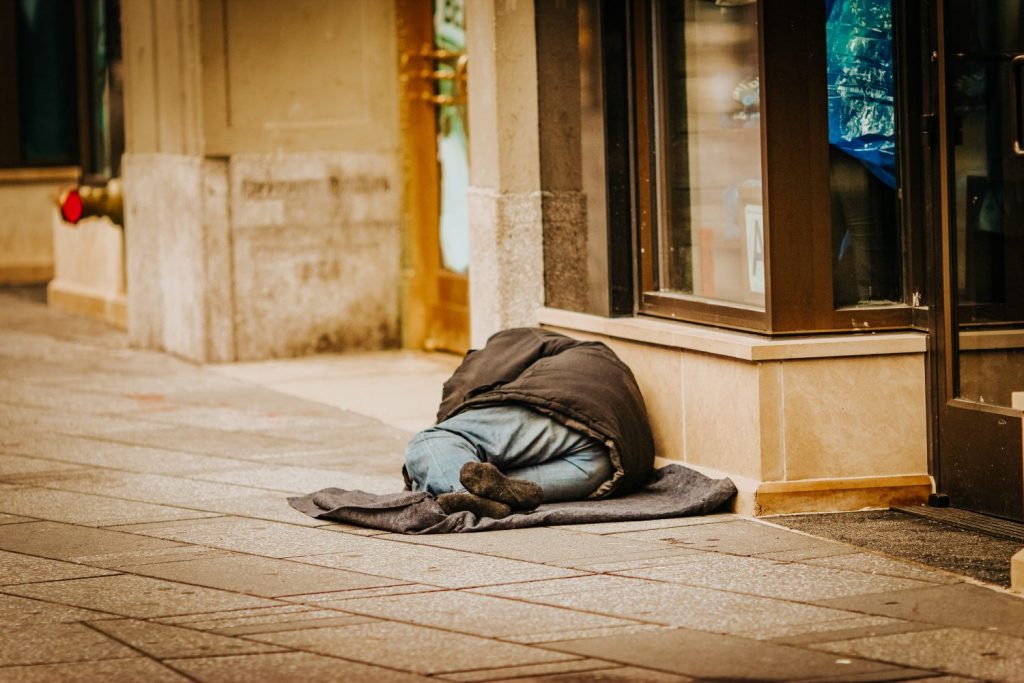
The calls we receive range from eviction notices due to reno-victions, homes being sold, motels increasing the weekly rent by 50% with no notice to tenants, or motels giving tenants 48 hours’ notice to vacate. Tenants in motels don’t have protection from the Residential Tenancy Act.

They are the people who work at the grocery store as your clerk, wash your dishes at restaurants, serve your coffee at fast food establishments, or cleaning hotel rooms for out of town guests. They are the people who worked over half their lives in our community and are now facing serious housing insecurity and can’t compete with market prices because pensions are too low. They are single mothers who left abusive relationships and are relying solely on income assistance and child tax. They are those with serious mental illness who rely on disability assistance. They are two parent households working minimum wage jobs just trying to get by and provide for their children. They are care aids caring for our elders, and small business owners.

Penticton seems to not realize that the same people who face housing insecurity are contributing to our local economy, and they deserve to have a safe place to call home. When you lose housing, you lose so much more than a roof over your head. You lose safety and security. You lose the ability to care for yourself and prepare food for yourself.

You can apply for BC Housing, but the wait is years. You can search for market rentals, there are no places to go. There are no places when you are on a fixed, limited, working poor income, or earning just over the poverty line.

When will we as a society hear the need for affordable housing?

It’s easy to place the blame on “laziness” or “choice”. There are some circumstances you simply can’t plan for.

Will we refuse to see the need for change in our community, until we or our loved ones have faced the hopelessness and utter bleakness of the housing crisis?

Open your hearts and eyes to this crisis that is affecting our community. We need sensible leadership to address this. We need affordable housing.”


Free Writings from Marginalized Voices

Today we are sharing some downloadable ‘zines’; short, independent booklets created for public distribution by Indigenous Canadians. Here is a golden opportunity to hear perspectives that are not vetted by the dominant culture, reworded or reformatted for better “palatability”, or making a profit from your attention. Click the links below to check them out.


klr-zine

colonization_decolonization

ancestral_pride_zine


Support for Pathways

In March, there was some very sad news about our partners at Pathways Addictions Resource Centre in Penticton. Interior Health is reconfiguring its mental health and addiction services and had decided not to continue to fund Pathways for those services, but rather to offer those services itself. This means that Pathways has now lost 90% of its funding to provide those services to the residents of the South Okanagan.

For over 40 years, Pathways has been providing addictions counselling to our community members – not only to addicts, but to their families, employers and the community at large. They have been a valued, trusted and loved resource in our community and a respected partner of Access.

We at Access hear and share the concerns (and sadness) of our clients, co-workers and the community at large in response to this change. While we recognize the right of Interior Health to spend its money as it sees fit and wish them success in their work to provide services in our community, we do have concerns about the consequences of these changes.

While Interior Health will provide counselling services we wonder who will provide the other services provided by Pathways: providing prevention education in schools, assessments for parents who are working to have children returned from Ministry Care, working with corrections and probation and providing service 24/7 when needed.

In addition, we know that it will take time for the community to transfer the trust that Pathways has earned over the last 45 years to a Government agency. We know that there will be needy people who will fall through the cracks and who will not be served for a variety of potential reasons and therefore that the need for Pathways’ services will not disappear. This is especially true now, when Penticton is struggling to cope with the needs of a growing homeless population, many of whom need mental health and addiction services.

We at Access believe that Pathways’ services need to continue and that they need support in their search for new sources of funding to enable them to continue to provide those valuable services.

We urge our supporters to extend their support to Pathways in any way possible: by visiting Pathways’ website (https://www.pathwaysaddictions.ca/), by signing the petition at Change.org (https://www.change.org/p/interior-health-help-save-pathways-addictions-resource-centre), by writing letters of support to the newspaper and their elected officials, or by making a donation (donations directly to Pathways or through Canada Helps will get you a tax receipt, those made through Go Fund Me do not).

Please support this amazing organization that has brought healing and hope to so many in this community over the last 45 years!

-Elmie Saaltink, Chair of the Board


What Does a Family Law Advocate Do?

What is a family law advocate and what are the responsibilities and the mandate of a family law advocate?

I’ll start out by saying that I’m not a lawyer because I am not a member of the Law Society. I am trained by the Law Foundation of BC in trying to try to assist people in most areas of family law. That includes issues with children, guardianship, parenting time, parenting responsibilities, support orders, on occasion, protection orders, assisting with divorce applications and and uncontested divorces. Another area is division of family assets, I can assist people with that where the assets do not exceed $20,000.

Other ways that I can assist individuals is to refer them to other resources in the community. For example, the family duty counsel and the duty counsel lawyers provided by Legal Aid BC at the Penticton courthouse. I also refer to the Family Justice counselor, here in town that will assist in arranging a consent order.

Any questions that I don’t have an answer for I have a supervising lawyer that will come in and discuss legal issues with me on Friday mornings. I also have a family advocate support lawyer in Vancouver that I can access so if there are questions that I cannot answer, I can refer to my resources to get a concrete legal answer for my clients. So if anybody has any family law issue, I welcome them to contact the Access Center and I will interview them and refer them to resources or assist them in any way that I can.

David Desautels

Staying Well in a State of Emergency COPING AND ADAPTING TO THE COVID-19 PANDEMIC

Schools, businesses, arts and culture venues, workplaces and social services organizations closed their doors or reduced their hours and capacity. Many people lost their jobs, travel restrictions were imposed and visits to our loved ones in long-term care were cancelled. We were also asked to maintain physical distance from people outside our immediate household. Thoughtful leadership and widespread public cooperation with public health orders “flattened the curve” over the late spring and early summer—that is, slowed the rate of viral spread—in phases 1 and 2 of BC’s Restart Plan.

Starting at the end of June, BC moved into phase 3, with travel within the province encouraged, along with planning for and restarting in-person education for kindergarten through Grade 12. The pandemic and the public health response have been stressful for many of us. Fear and worry about our own health and the health of our loved ones, loss of the support services we count on and a change in our financial situation have been difficult. While public health measures are needed to control the spread of the disease, these actions can leave us feeling isolated and lonely and can impact our sense of well-being. The effects of the orders are experienced unequally across different groups of people. For some of us, the social and economic impacts are inconvenient. For our most vulnerable citizens, they can be a matter of life and death. People living in poverty and experiencing homelessness, people living with existing mental health and substance use challenges, people living with disabilities and struggling to access necessary care, and adults and children at risk of gender-based violence have experienced additional and serious unintended consequences as a result of measures taken to reduce the transmission of COVID-19.

COVID-19 in the context of other public health emergencies In BC; the COVID-19 pandemic has compounded the existing opioid overdose emergency. The growing toxicity and unpredictability of street drugs as a result of disruptions to the drug supply chain since late March 2020 is the primary cause of overdoses and deaths. Before COVID-19, people who used substances could reduce the risk of harms by accessing nearby services and social networks. The introduction of COVID-19 response measures has impacted service delivery and disrupted the settings and context of drug use, which has contributed in part to an increase in overdoses. People experience reduced access to overdose prevention, supervised consumption and community drug checking services and, due to physical distancing measures, reduced ability to use the “buddy system” intended to reduce using and overdosing alone. Social and economic situations were compromised, which created additional mental distress and increased substance use due to decreased employment, income and housing security, and increased social isolation. The BC Coroners Service reported 170, 175 and 176 illicit drug deaths from May to July 2020, respectively, the highest counts of monthly overdose deaths since the opioid emergency was declared. While August and September numbers of overdose deaths were lower at 150 and 127, they still reflect an increase of 110% over September 2019.

  1. Risks are made worse by poverty, homelessness, unstable housing and the stigma experienced by people who use illegal drugs. Recent media reports of police violence and reported increases in racism and hate speech in Canada and the US, along with long-standing existing racism experienced by Canada’s Indigenous peoples, show us that racism is a third, unofficial, public health emergency. Incidents of racial tension and increased media reporting on the issue—during the already dire circumstances of a global pandemic—has been met with global Black Lives Matter public protests against systemic racism. First Nations people have a history of suffering adverse impacts of pandemics. As a result of the historical, intergenerational and contemporary trauma that many First Nations people live with, the pandemic can be a trigger for increased mental distress, worry, irritability and other negative impacts. The continued impacts of colonialism and systemic discrimination and racism are also reflected in the disproportionate impacts of the overdose public health emergency on Indigenous peoples in BC. From January to May 2020, 16% of all overdose deaths were of First Nations people. First Nations represent only 3.3% of the province’s population.
  2. In the past several months, instances of intolerance, stigmatization and acts of violence towards Asian people and communities have taken place. While Asian communities have experienced racism in the context of health crises before (for example, during the SARS epidemic), targeted anti-Asian racism and discriminatory acts have increased in frequency and intensity throughout Asian communities in BC and across Canada during COVID-19.

These trends are worrying. I am concerned about the intersecting effects of racism, sexism and genderbased violence in the context of the dual public health emergencies in BC. I am concerned about the long-term There is increased awareness and focus on addressing systemic racism, insufficient mental health supports, gender-based violence and other issues that have significant impacts on the physical and mental well-being of individuals and communities.

Impacts of the spring suspension of in-class learning on children and youth; as a grandparent, I witnessed firsthand the social and educational impact. I am concerned about the long-term impacts of the public health emergencies on our economy and, despite positive job growth in BC and Canada beginning in June, the widespread job loss experienced across the province, particularly by women and young people. I am concerned about our ongoing willingness to observe physical distancing advice. I see in my own family the weariness that comes with following stringent public-health directives over the long term; we have all lost time with loved ones, and we have all curtailed or avoided activities that bring us pleasure and joy. I am also concerned about the failure of US federal leadership to listen to experts and to develop a cohesive approach to reducing the number of COVID-19 cases and deaths, and what this might mean for our health and our economic recovery here in Canada.

Drawing on our strengths as we move forward, despite these concerns, I am hopeful. We have strong public health and political leadership in our province and country. There is increased awareness and focus on addressing systemic racism, insufficient mental health supports, gender-based violence and other issues that have significant impacts on the physical and mental well-being of individuals and communities. We have made thoughtful and creative adaptations to service delivery across the province. Overall, there is a continued willingness on the part of British Columbians to do what it takes. A number of resources have been created or expanded to support our health care systems, including the publication of extensive, easily accessible information about COVID-19, provision of increased mental health supports, adaptation of service delivery and other innovative initiatives. One of these initiatives includes the March 2020 release of the BC Centre on Substance Use’s prescribing guidelines, intended to reduce risks for people who use drugs, while supporting them to maintain physical distancing and self-isolation, while the more recent public health order authorizing nurses to prescribe pharmaceutical alternatives to the poisoned drug supply will help save lives and provide opportunities for care, treatment and support. Extensive planning, additional funding, enhanced safety measures and new resources have enabled a safe return to school for BC’s K-12 students, supporting their emotional and mental well-being and ability to socialize and learn, ensuring that children needing additional resources receive supports and enabling parents to return to work. These innovations illustrate how flexibility and adaptability will enable us to safeguard the health and well-being of all people in BC, while ensuring that those of us who are most vulnerable receive the supports, care and protection we need.

RIVER CHANDLER, MA

Published in VISIONS Vol. 16, No. 1 (2020)

https://www.heretohelp.bc.ca/visions

This Toronto doctor helps people get more money to improve their health
By Leslie Young  Global News

Posted May 19, 2019 6:00 am

A few years ago, a woman came in to see Dr. Gary Bloch at his family medicine clinic in Toronto.

She had “just terribly, terribly controlled diabetes,” he said. “Her blood sugar was literally through the roof, for many reasons.

“She ate terribly. But she ate terribly because she couldn’t afford food. She took her medication sporadically, but she took her medication sporadically because there were a lot of pressures in her life. She often couldn’t afford to get medication so just didn’t take them.”

The woman was starting to develop complications of diabetes — numbness in her feet, kidney problems, vision problems, Bloch said.

His treatment? Helping her improve her income.

Dr. Gary Bloch, of St. Michael’s Hospital in Toronto. Courtesy, Gary Bloch

Bloch and his team at the Academic Family Health Team at downtown Toronto’s St. Michael’s Hospital helped the woman apply for the disability benefits she was entitled to — just one of the services they provide. They also help patients do their taxes so that they get benefits like the Canada Child Benefit, and apply for programs designed to help low-income individuals, along with other social supports.

The clinic isn’t giving away money — these are government benefits that these patients qualify for – but helping people do the paperwork can make a big difference in their lives, and their health, Bloch said.

In this case, getting disability support meant that the woman had a steady source of income, he said, and was able to get some of her medications covered. “The change in her diabetes status was actually quite dramatic,” Bloch said. “Literally, her sugars came down by more than half. You talk to anyone who deals with diabetes and that is very, very unusual.”

Getting just a few hundred dollars extra per month leads to dramatic changes in his patients’ health, he said.

“Worlds open up. I know that sounds dramatic but it is absolutely what I see over and over again.

“Someone like this, they’re suddenly able to go rent a place, they’re able to buy food, they’re able to attend appointments with me and they’re able to often go to counselling.” All this improves their health, he said, allowing them to take medications regularly, eat better and take care of themselves.

From tent to apartment

Visiting Bloch’s clinic made a difference in Brian’s life. Brian, who lives in Toronto and didn’t want his last name shared for privacy reasons, used to be homeless.

He ran away from home at 14 and spent years moving around Canada, including 23 years living in a tent in B.C. and the Greater Toronto Area.

When he needed medical help, he visited the emergency room. One time, he said, “I got a ride out of Toronto as far as Highway 9 and 400, and I was on the on-ramp hitchhiking north back to B.C. and I had my third heart attack right there on the ramp.”

By the time he got out of hospital in Newmarket, he said, someone had slashed up his tent. He moved again, setting up at times near the Metro Toronto Zoo or the Ontario Science Centre as his chronic obstructive pulmonary disease began to give him trouble again. So he was back in the emergency room, this time in Scarborough.

Eventually, through referrals from various homeless programs, he got in touch with Bloch.

The clinic helped him get a prescription for his medications through a pharmacy, get funding for his special medical diet, get disability payments, counselling, and housing support. He also receives Old Age Security payments and the

Now in his 60s, Brian no longer lives in a tent.

“I’m styling here, I’m sitting on top of the world now,” he says of his one-bedroom apartment. He takes occasional work driving a bulldozer and has even reconnected with the family he left behind at 14.

How a community can deal with children and youth to help break the cycle of poverty

His health has improved, too.

“I haven’t had any trouble with my heart for a long time now. As long as I keep doing my pills and everything, it’s good.”

Although he still gets short of breath at times, his COPD is better, he said, and he no longer has angina pains.

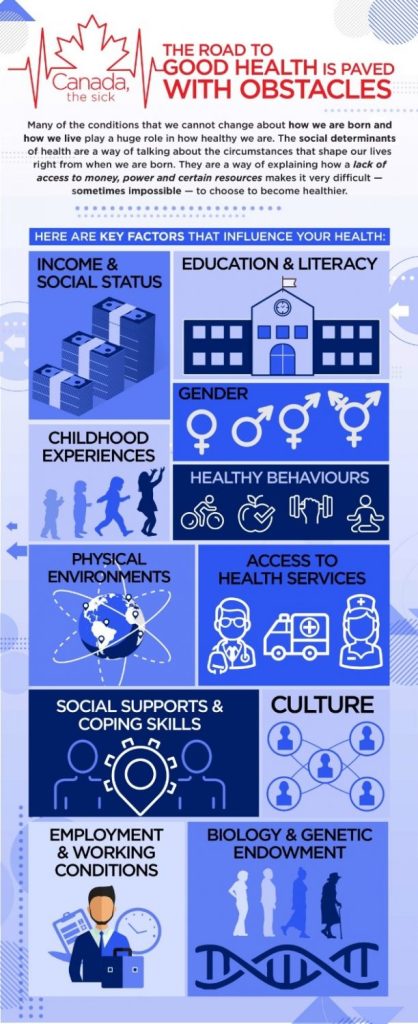
Poverty and health

Income is very closely tied to health, according to Dennis Raphael, professor at York University’s School of Health Policy and Management. Low income is associated with a higher risk of “everything except prostate cancer and breast cancer,” he said.

Many cancersarthritisdiabeteskidney diseaserespiratory diseasestroke and more are all associated with income, he said. So is life expectancy — according to a Statistics Canada analysis of data from 2005-06, men in the richest Canadian neighbourhoods live almost five years longer than those in the poorest.

Being poor affects your concrete living conditions, things like food and shelter, Raphael said. “We could use some examples of crowding. We could use examples of mould, we could use examples of poor diet.

“Basically, when you are living under conditions of material deprivation, it does things to your body that make you more susceptible to disease.”

Scrounging for money is also stressful, he said, and chronic stress, day after day, takes a toll on your health. And some people deal with stress in a negative way — drinking, smoking, using drugs, or eating bad food, he said.

“I often say there is no better-studied epidemiological link out there right now than between poverty and poor health,” Bloch said. “I’m at the point where I wonder why people keep even looking at it because I think it is that well-proven.”

Many of his patients aren’t aware of the benefits they’re entitled to, or why they should file taxes even if they know they won’t owe any money, he said. “People basically face multiple levels of barriers, whether it’s health barriers, social barriers, educational barriers, literacy barriers. Just basic knowledge barriers of where to go.”

Many Canadians aren’t getting the money they’re entitled to, even when they do claim it. A 2014 report found that the government was sitting on hundreds of millions of dollars of uncashed cheques for tax benefits and refunds.

The Canada Revenue Agency is “promoting and raising awareness” of benefits and credits that can only be obtained through filing taxes, the agency wrote in a statement. “In 2017?18, the CRA sent letters to 300,000 lower-income Canadians who had not filed a return, informing them they might be eligible for benefits and credits which they are not receiving and encouraging them to file their returns,” the CRA wrote. Only 37,934 returns were filed as a result, they wrote, though these accounted for millions of dollars.

“I believe that a lot of people that are living on the street don’t know how to access this stuff because they’re in another world,” Brian said.

“The biggest problem with being homeless is they got no money,” he said.

Now that he has a bit, with support from Dr. Gary Bloch and Celia, a social worker at the clinic, “My life is completely changed around now.”

“I have family, (…) my cupboards are full. My fridge is full. You know, I don’t want for nothing. I have money for transit. It’s been a complete turnaround and I really put all of that back to St. Mike’s at 80 Bond St. and to Gary and Celia.

“If it wasn’t for them, who knows where I would have been right now? I might be dead, OK? And that’s no lie.”